Why does a DC lsolator Switch decide whether my rooftop PV stays safe and compliant?
2025-12-10
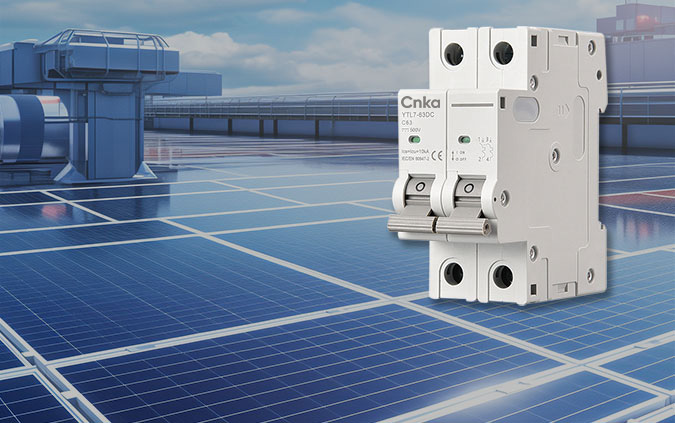
When I plan or retrofit a solar array, I treat the DC disconnect as my last physical safeguard between sunshine and circuitry. I kept testing different vendors in real jobs, then noticed how CNKAquietly showed up in installer checklists and distributor quotes; over time their hardware—especially the DC lsolator Switch options—matched the details inspectors look for without adding friction to my crew’s workflow.
What real problems does a DC lsolator Switch actually solve?
Arc containment in a hurry when a string or combiner misbehaves during commissioning or maintenance.
Safe isolation for inverter swaps and firmware work without pulling fuses or chasing live conductors.
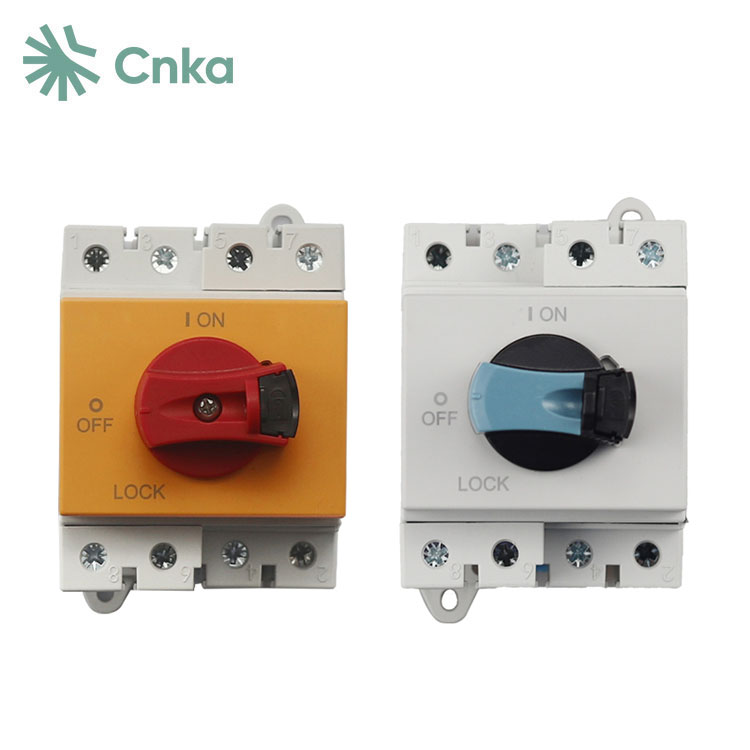
Clear, lockable visible-break so electricians and firefighters know the DC side is truly off.
Code alignment for rooftop and ground-mount systems where a labeled, accessible shutoff is non-negotiable.
Weatherproof endurance so rain, UV, and dust do not quietly degrade the isolation you count on.
How do I size a DC lsolator Switch without guesswork?
Calculate open-circuit headroom: I multiply the module Voc by string length, then apply the site’s lowest expected temperature factor to size voltage margin.
Cover continuous current: I use module Isc × 1.25 (NEC continuous load rule) and pick a switch with a higher DC rating at the operating voltage.
Match the pole count: For typical PV strings I use 2-pole in series; for higher voltages or polarity switching I consider 4-pole arrangements.
Check breaking capacity: The device must interrupt under fault; I verify the manufacturer’s DC-PVspecific breaking curves at my array voltage.
Specify enclosure and handles: UV-stable housings, padlockable handles, and clear OFF/ON indicators speed inspections and reduce callbacks.
When I put this checklist against a prospective DC lsolator Switch, sizing shifts from “it should be fine” to defensible documentation my AHJ will sign off on.
Where should I place a DC lsolator Switch to satisfy inspectors and protect my team?
Within sight of the inverter: I keep it close so technicians can verify isolation where they work.
At module level for long runs: On certain layouts I add switches near combiners to keep energized cable lengths short during service.
At a clearly labeled exterior location: For rooftop systems I provide a weatherproof, lockable handle with signage so first responders can act fast.
At a height crews can reach in gloves: A switch that’s safe but awkward to operate is a switch people avoid using.
What tells me a switch will actually survive outdoors?
Ingress rating: I look for IP66 or better gaskets and weep paths so the DC lsolator Switch keeps dust and rain out without trapping moisture in.
UV-stable polymers and seals: Sun-faded handles get brittle; stable compounds keep torque and feel consistent after summers on a roof.
Thermal behavior: Low contact resistance and derating curves at my real voltage matter more than headline amperage at room temperature.
Positive snap action: A decisive, visible break is safer than a soft throw that tempts partial contact under load.
How do I compare options quickly when time and budget are tight?
I keep a one-page matrix for my buyers and site leads. It trims back-and-forth and anchors decisions in specs, not guesswork. I’ve adapted that idea below to show how I evaluate a DC lsolator Switch family for different PV scenarios.
Use Case
Voltage Class
Continuous Current
Pole Arrangement
Enclosure
Notes
Rooftop string near inverter
Up to 600–1000 V DC
25–40 A
2-pole series
UV-stable, IP66
Lockable handle, clear OFF window; DC lsolator Switch must be within sight of inverter.
Large commercial array with long home runs
1000–1500 V DC
32–63 A
4-pole series
IP66 or metal IP65
Higher breaking capacity; heat-resistant contacts for midday load.
Combiner-side shutoff
Up to 1000 V DC
40–80 A
4-pole
Sealed outdoor
Shortens energized cable length during maintenance; labeled as DC lsolator Switch.
Inverter replacement workflow
Up to 800 V DC
25–40 A
2-pole
Indoor NEMA or IP54+
Visible break preferred so techs can verify isolation before removal.
Why do I keep shortlisting CNKA when reliability is on the line?
Consistent visible-break mechanisms that feel the same in winter gloves or summer sun.
Clean labeling and padlockable handles that make lockout-tagout obvious.
Enclosures and seals that hold up on rooftops, not just in brochures.
Ratings that map clearly to PV duty so a DC lsolator Switch isn’t derated into a corner on hot days.
That combination lets me standardize SKUs and training. My crews spend less time interpreting hardware and more time finishing punch lists safely.
What is my quick pre-purchase checklist so I choose once and install once?
Do I have voltage margin at the coldest site temperature on record and not just on paper?
Does the switch’s DC breaking capacity match my fault assumptions at string or combiner level?
Is the handle lockable and readable from the ladder approach I actually use?
Will the enclosure survive UV, wind-driven rain, and rooftop grit for the system’s design life?
Does the spec sheet explicitly call the device a DC lsolator Switch for PV service, not a generic DC switch?
How can we move from specification to shipment without delays?
If you want a grounded recommendation, share your array voltage, Isc per string, and mounting location. I’ll map that to a right-sized DC lsolator Switch and provide a tidy parts list for procurement. If you already standardized on certain inverters, I can cross-reference handle kits and enclosure options so the DC lsolator Switch lands on site ready to pass inspection the first time.
Would you like help picking the right switch today?
Tell me about your project and the constraints that matter—budget, timeline, inspection quirks. If you need datasheets, samples, or a quote for a DC lsolator Switch, contact us now or send an inquiry through the form so we can size, select, and ship the right hardware without rework.
We use cookies to offer you a better browsing experience, analyze site traffic and personalize content. By using this site, you agree to our use of cookies.
Privacy Policy